More or Less, by topic
Every recording, cut into the arguments that mattered. One clip per topic, with the key points and where Jessica Lessin, Dave Morin, Brit Morin and Sam Lessin each landed — plus a 🎙️ Sam's Highlights reel of his best standalone moments from each episode. Newest episode first.
Home · 🎙️ Sam's Highlights · Episode archive & transcripts · YouTube · Spotify · molchat.ai
 1:13 min
Cold Open: "Neither Dave Nor I Have Chinese Wives"
The gang kicks off a Wednesday taping (the news cycle moved too fast for their usual day) by immediately teasing the week's real story: the Jensen Huang scandal.
 3:39 min
The NYT Scoop: Jensen's Girlfriend Ran the Network Smuggling NVIDIA Chips to China
Jess lays out the New York Times blockbuster: the US government is investigating whether Jensen Huang leaked intelligence to a girlfriend whose companies funnel export-controlled NVIDIA chips to Chinese customers — and the NVIDIA board has hired Wachtell Lipton to investigate.
 4:25 min
Narrative Capitalism: Why a $4.19 Trillion Stock Moved on a Sex Scandal, Not Fundamentals
NVIDIA's market cap (down 11.5% in five days to $4.19 trillion) swung on pure narrative, not product news — Sam calls it "narrative capitalism," and Dave says it proves his whole theory of how markets work right now.
 2:52 min
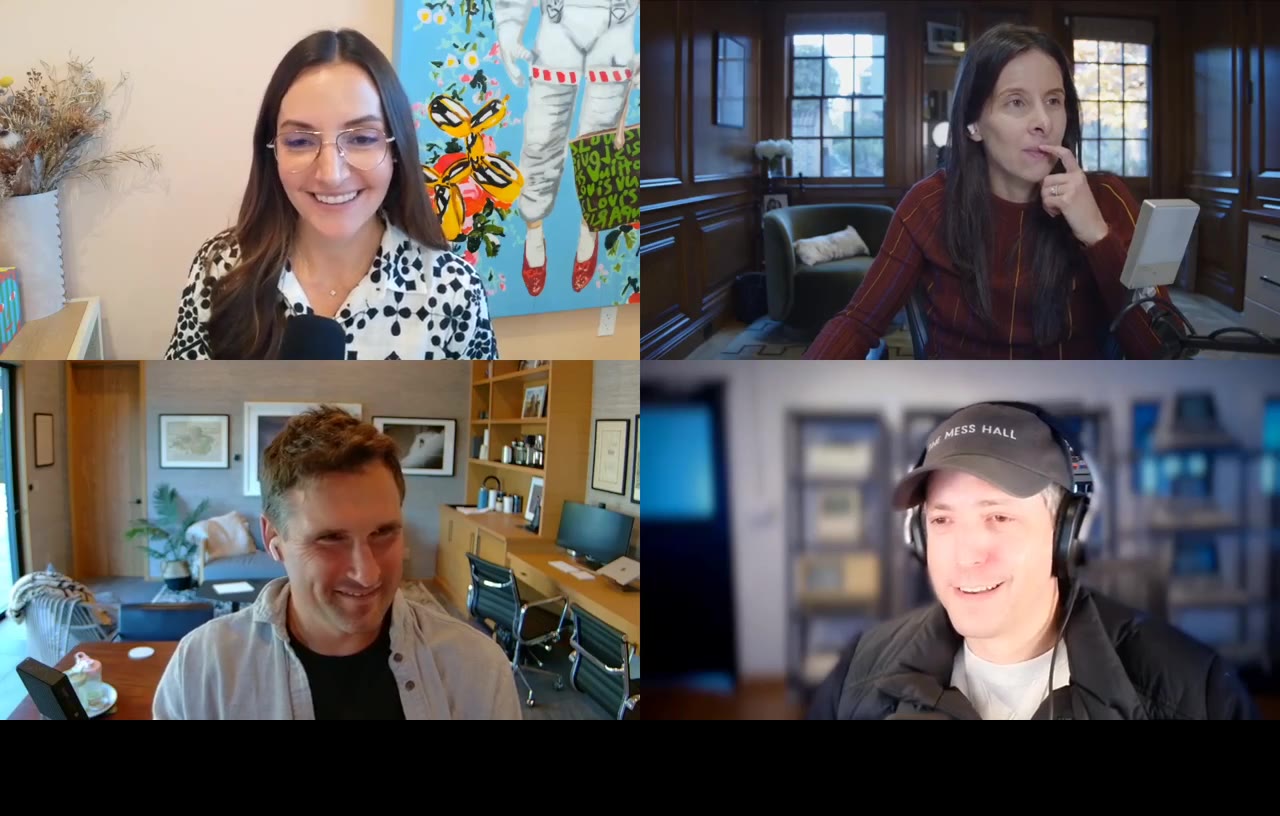
Sam's Hot Take: Jensen Is Out Because His Meme Game Isn't Strong Enough
Sam predicts Jensen won't survive this — not because of the affair itself, but because, unlike Elon, he doesn't have the mass-communicator charisma to out-meme a scandal in a post-midterm political climate.
 5:11 min
Brit Pitches the Succession Fan-Fic While Prediction Markets Swing From 33% to 80% Out
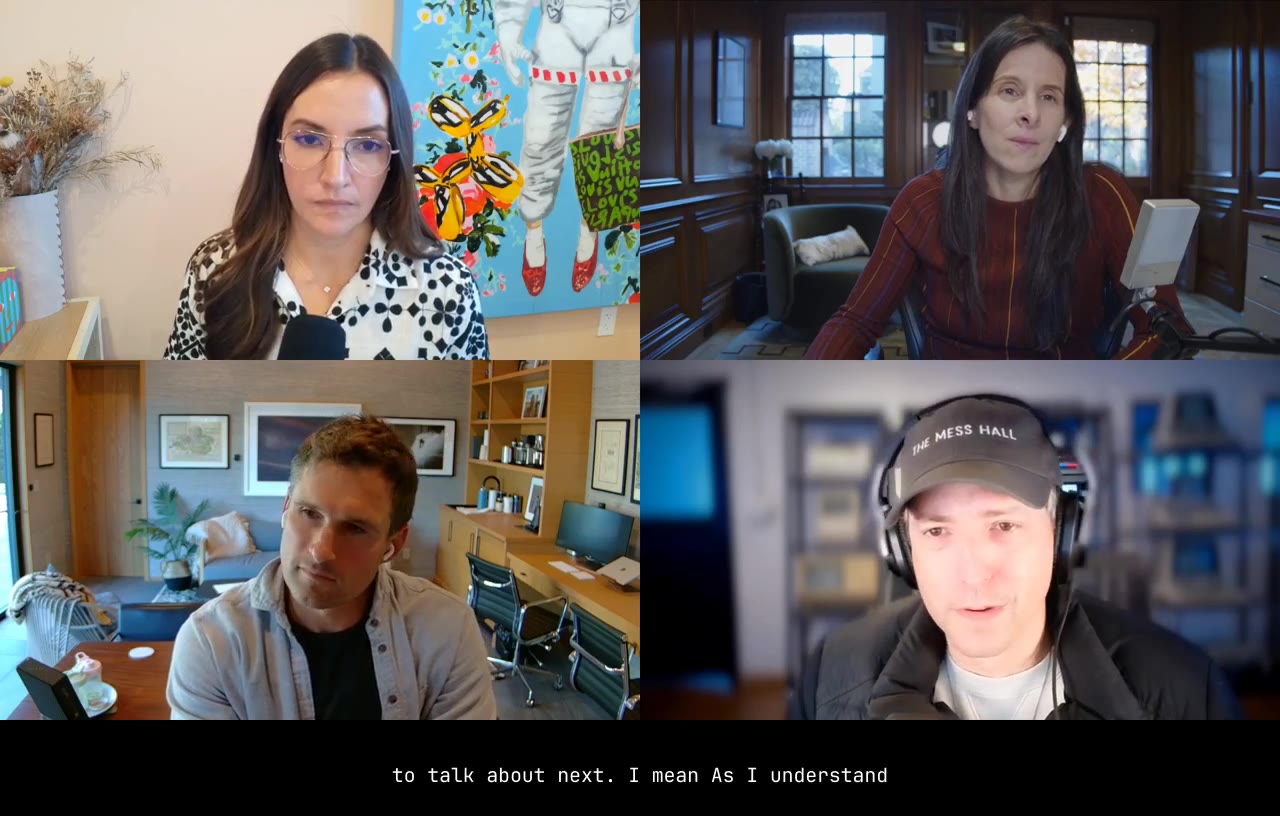
Brit writes the Hollywood ending (Jensen's kids take the throne), the information's prediction market jumps from 33% to 80% overnight, and the table debates whether NVIDIA's deep bench — or Tim Cook — could actually replace him.
 2:22 min
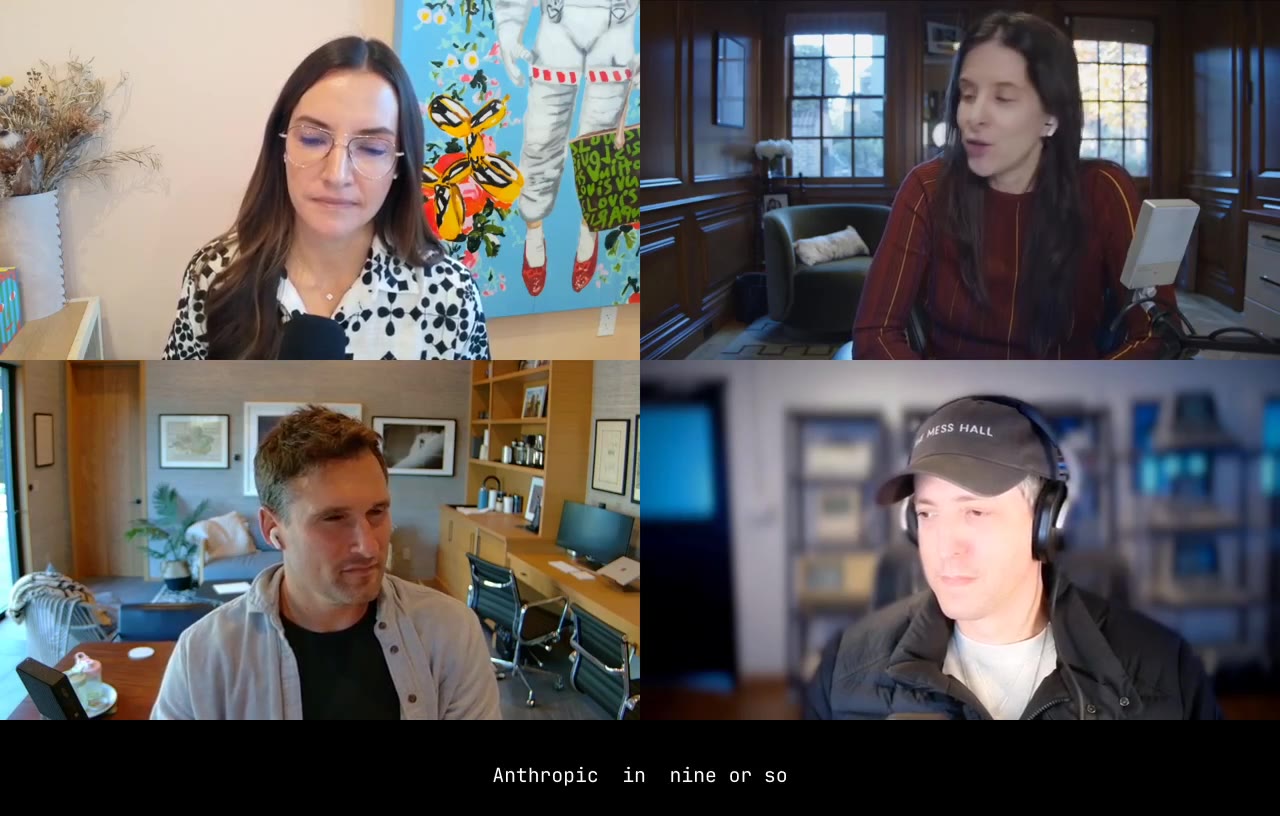
Dave: Even Anthropic's IPO Is Riding on NVIDIA's Balance Sheet
Dave lays out just how load-bearing NVIDIA is for the entire AI stack — including a 10% stake in rival Anthropic's own IPO — and warns that Jensen's Silicon Valley charisma may not travel past the bubble that made him.
 4:01 min
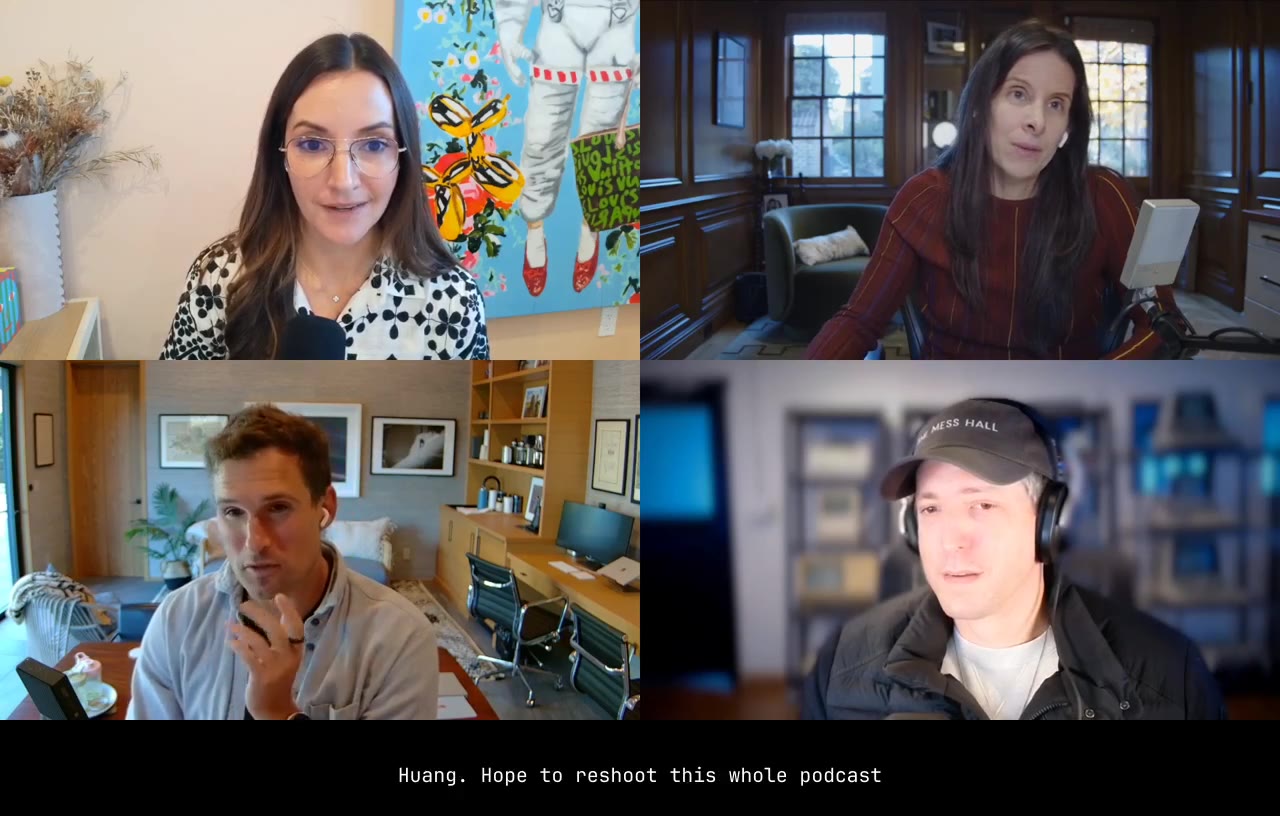
Ariana Huffington Live-Texts the Pod, Then Sam Reveals His New Insider-Trading Bot
A real-time text from Ariana Huffington ("it's always been human nature") derails the taping into a riff on the Anthropic roadshow video's Hallmark-movie production values, before Sam shows off an AI bot that monitors every executive's insider-trading filings.
 5:36 min
Sam's Theory: AI Companies Have a Secret "Make It Dumber" Dial to Hit Their Quarter
Frustrated by Claude botching simple spreadsheet tasks, Sam floats a theory: like ad companies dialing ad load up or down to hit earnings, AI labs may be quietly dialing model quality down near quarter-end to protect margin — and Dave adds a second dial, for how 'parasocial' a model feels.
 4:42 min
Who Could Actually Run NVIDIA? Tim Cook, Apple's Silicon Chief, and Why Relationships Matter More Than Chips
The table gets semi-serious about succession: Dave argues Tim Cook is the only executive alive with the relational gravitas to run NVIDIA, while Jess counters that Jensen built a genuinely superior product — this isn't just a popularity contest.
 5:35 min
Did Jensen Make the AI Boom, or Did the AI Boom Make Jensen?
Jess answers the episode's title question directly: Jensen didn't talk his way to the top — the AI boom needed an arms dealer, and NVIDIA happened to have the best chips when the world's biggest companies needed him to be a rock star.
 3:01 min
Would You Buy NVIDIA or Anthropic Right Now? Sam's "Regret Minimization" Theory of IPO Investing
Dave jokes he's staring at his broker app; Sam explains why he'll never personally buy a trillion-dollar asset and why the only honest reason to buy Anthropic at IPO is pure regret minimization — before Jess shuts down Q1-bubble-popping talk entirely.
 2:25 min
Sam's Closer: Humans Just Want to Be Entertained, and AI Is Making the World Better at It
Sam argues this entire scandal is proof the world is simply getting more entertaining thanks to AI and algorithmic feeds, while Jess closes the loop by insisting old-fashioned reporting — not AI — is what actually broke this story.
🎙️ Sam's Highlights from this episode
 1:22 minSAM
Sam: Powerful People Don't Cheat Because They Think They'll Get Away With It — They Do It Because They've Stopped Feeling Anything
Sam's sharpest, most standalone theory of the episode: extreme wealth and power numbs you, and scandal is what happens when you chase danger just to feel something again.
 1:08 minSAM
Sam: I Set an AI Bot to Monitor Every Executive's Insider Trading Filings
Sam shows off his latest bot project — scanning daily SEC filings to back out executives' real stock-sale strategies — and calls it one of the best public-data use cases for AI he's found.
 1:04 minSAM
Sam: I Told Claude to Order Cameras for My House and It Just... Did It
Sam describes handing Claude full autonomy to buy, ship, and self-configure a home camera and VPN network — no manual setup required — and calls the result both amazing and slightly unsettling.
 1:13 minSAM
Sam: AI Companies Have a Secret Dial Between 'Make It Smarter' and 'Make It Dumber'
Sam's core theory of the episode, delivered in one unbroken monologue: AI labs may be quietly tuning model quality down to protect margin, the same way ad businesses dial ad load up or down to hit a quarter.
 1:09 minSAM
Sam: The Only Honest Reason to Buy Anthropic at IPO Is Regret Minimization
Sam explains why he'll never buy a trillion-dollar asset in size, why a genuine ten-trillion-dollar Anthropic barely makes sense, and why he'd rather dream big on a hundred-million-dollar company instead.
 0:48 minSAM
Sam: The World Isn't Just More Algorithmic — It's Genuinely Getting More Entertaining
Sam's closing-stretch riff ties the entire Jensen Huang saga back to his running theory: humans are wired for entertainment, and AI is making the world dramatically better at supplying it.
 5:45 min
The Blue Wave Didn't Crash the AI Trade (But It Cost Sam Real Money)
After a sweeping Democratic election night, Jess reads the next-day market as a sign the AI trade is sturdier than the doom narrative says, while Sam admits his sell order didn't go through and argues data centers just got harder to build.
 3:58 min
California Dodges the Wealth Tax, and Sam Announces "Cuck Financing"
Parker explains why the California wealth tax would have driven out the fast-growing founders the state wants to keep, and Sam pivots to an announcement: Slow Ventures will now offer to cuck-finance any company's seed round.
 6:30 min
"We've Run Out of Money": Is the AI Financing Spigot Closing?
Jess says New York money people think AI financing is about to dry up; Sam says the hyperscalers have simply run out of money; Parker says gross margin on tokens is the metric investors ignore and great companies can always raise.
 3:58 min
Are We All Just Companies Now? Parker's Pitch for "AI for Boring"
Jess asks Parker about the SaaSpocalypse narrative versus running a big SaaS company; his answer is that the software-versus-AI distinction won't matter, and Rippling AI should be marketed as AI for the boring stuff, like government notices.
 4:58 min
Sam: To Understand the Agentic Future, Read Ari Emanuel's Book on Hollywood Agents
Sam argues AI agents will work like Hollywood agents: a few trusted relationships doing whatever you ask. Parker counters that the moat goes to whoever sees the work that needs doing first.
 4:41 min
Sam's Notes File Feeds a Fleet of Competing Agents; Parker Says Permissions Are the Moat
Sam describes giving every personal AI agent a private link to his notes so they compete to finish his tasks; Jess says hers asks bad questions, and Parker says no one has solved assistant permissions for business.
 3:57 min
Zero Margin on What Claude Can Do, Real Margin on Everything Else
Jess asks whether AI features get commoditized; Parker says Rippling will charge usage-based fees, take zero margin on what Claude can do, and earn margin where its data and capabilities are unique, with the goal of deleting the bottom half of an HR or finance job.
 5:17 min
Vibe-Coding a Shotgun: The Last-Mile Problem, and Should AI Set Your Pay?
Parker says AI can write the last mile of software at install time but vibe-coding the core is a shotgun pointed at your own legs; Sam says AI is excellent at using software and wants it to negotiate pay.
 4:16 min
Could You Rebuild Rippling Today? Sam's Nuclear-Missile Theory of Software Jobs
Sam asks how long Rippling's $17M, two-year build would take with AI today; Parker says money moves and regulators limit speed, and Sam argues that high-stakes businesses sell trust, not software.
 4:16 min
Deel's Subpoena Fight, and Why Parker Finds Deleting Boring Work Fun
Jess asks about the Deel lawsuit and Parker reveals prosecutors subpoenaed Rippling for Deel's litigation material and Deel is fighting it; Sam asks what's fun about being a CEO.
 2:58 min
AI Killing Engineering Jobs Is "the Biggest Load of Bullshit" (Plus Sam's Random-Reward Payroll)
Sam asks if Rippling is still hiring engineers, and Parker erupts that the mass-unemployment prediction is bullshit; Sam concedes great engineers, then pitches random-reward AI payroll.
 3:19 min
Overrated, Underrated: Tune Out the AI Trade, Bet on the Application Layer
Parker says to tune out day-to-day AI trade noise, calls the application layer tremendously undervalued, and argues AI apps should earn great gross margins on token spend; Sam asks how hard it is to switch models.
🎙️ Sam's Highlights from this episode
 1:00 minSAM
Sam: Introducing "Cuck Financing" and Slow's 0.0001% Offer to Every Seed Founder
Sam explains the new hot financing trick, where the lead invests a sliver at a huge price so everyone else pays it, then announces Slow Ventures will do it for any company that asks.
 1:40 minSAM
Sam: To Understand the Agentic Future, Read Ari Emanuel's Book on Hollywood Agents
Sam's framework for how agent businesses will work: a few trusted relationships doing whatever you ask, a brutal market with no competency moat, and startups that get customers first.
 1:34 minSAM
Sam: I Gave My Whole Fleet of AI Agents My Notes and Made Them Compete
Sam's real personal setup: a private notes file that every agent watches, with the agents racing to finish tasks he never assigned.
 0:51 minSAM
Sam: Humans Are Terrible at Using Software. AI Is Excellent at It.
A tight, standalone reframe of the AI-software story: the bottleneck was never writing software, it was people being bad at using it.
 1:13 minSAM
Sam: The Fun Jobs Aren't Nuclear Missiles, and in High-Stakes Software You're Really Paying for Trust
Sam explains why fast, experimental jobs go to agents while businesses where you can't screw up, like payroll, are really selling trust and a balance sheet.
 6:45 min
Bing Gordon's Origin Story: A Disneyland Fantasy, a Heathkit Catalog, and the Birth of EA
Bing traces his path from a teenage fantasy that Disneyland's animatronics came alive at night, through a Stanford decision-science class, to co-founding Electronic Arts in 1982 on a $2M raise — right before Atari's collapse nearly killed the industry.
 7:46 min
Bing Gordon's Founding Playbook: Bathroom OKRs, the 7% Market-Share Rule, and 'Can a Computer Make You Cry?'
Bing runs through the principles he says actually built EA: being laughed at as a sign you're onto something, OKRs borrowed from Intel's bathroom walls, a 7% market-share bar for going global, and an ad so unconventional the board called it a waste of money.
 6:11 min
'Welcome Back, Brit... to Everybody Who Has Your Credit Card': Why Being Known Is the Whole Game
Bing's #1 lesson from decades of game design is that people come back for other people, not money — which makes Amazon's broken "welcome back" greeting, and the agents that skip it entirely, the perfect modern punchline.
 6:09 min
Farmville, Then Amazon, Then ChatGPT: When Do Products Cross the Line Into Gaming Their Users?
Dave asks Bing the question the episode is named for — when does engagement design tip into gaming people against their own interest — using Farmville's quiet collapse in NPS as the cautionary tale, and landing on Amazon's sponsored listings and ChatGPT's endless follow-up question as today's version.
 6:57 min
Friction Makes Pearls: Bing Gordon on AI Slop, Gutenberg Panic, and Why Robots Must Be '10x Safer' Than Humans
Dave asks what's left for humans to actually do once AI can win for them; Bing's answer runs from "friction is what makes pearls" through Gutenberg-era panic over the printing press to the Cruise self-driving car that dragged a pedestrian as the textbook unimagined edge case.
 5:22 min
Why Bing Gordon Co-Wrote His Book With His Daughter Instead of Going It Alone
Bing wanted to be a writer or filmmaker before someone told him he wasn't a good enough liar for Hollywood; decades later, his daughter Chloe — "a writer" and "a gamer" — is the one who turned his talk-closing checklist into the structure of their new book.
 5:07 min
The 'Wow-F*** Scale': How Bing Gordon Measured Every Game EA Ever Shipped
Bing reveals the actual usability method behind decades of hits: playing as a novice with a stopwatch, logging every feeling from "wow" down to what he bluntly calls the "oh f***" — and the running list of tech's greatest wow moments, from World of Warcraft's first flight to the Amazon box on the porch.
 6:52 min
'Bet Your Job on It': Bing Gordon on Good Risk, Bad Risk, and the Wow Moments No Product Can Manufacture
Beyond products, Bing's wow moments live in parenting (the car 'noticing game,' his daughter's Great Gatsby epiphany) and in hiring — where his test for real conviction is the literal 'bet your boss' moment: an employee willing to hand over a pre-written resignation letter as collateral.
 4:10 min
'Menu Toys': Why a Great UI Can Make Engineering Look Better Than It Is
Bing's 'invest and express' principle — even a simple like is a contribution people stay loyal for — runs from Twitch's emergent chat culture to his term for great design, 'menu toys,' and a Bingism Dave Morin still uses at every board meeting he sits in.
 5:07 min
Wedding Rings Are a Better Retention Hack Than a Handshake: Bing Gordon on Session Economics
Bing's retention playbook runs from a contrarian bet that saved the Madden franchise, through a metric he calls 'session economics,' to the two things that reliably replace novelty once it fades — social meaning, then mastery.
 5:00 min
One Actionable Idea Per Hour: Bing Gordon's Rules for Gamifying a Board Meeting (and the Family Dinner Table)
Bing's board-meeting checklist — one actionable idea per hour, a 24-hour follow-up note, and 'energy' as the real scoreboard — scales down surprisingly cleanly to the Gordon family's own kid-run 'board meetings,' where Bing's official title is vice president of fun.
 5:37 min
Bing Gordon's Lightning Round: Star Wars, David Ogilvy, and Why He's 'Not a Doomer' on AI
A rapid-fire closer — favorite movie, business idol, best investment — lands on Bing's P(doom) answer (he thinks doomers are structurally biased to doom) and the three-part happiness formula he's kept unchanged since choosing EA over an ad agency in 1982.
That's every topic so far · Episode archive & transcripts